Erg Chegaga (Dunes Chegaga)
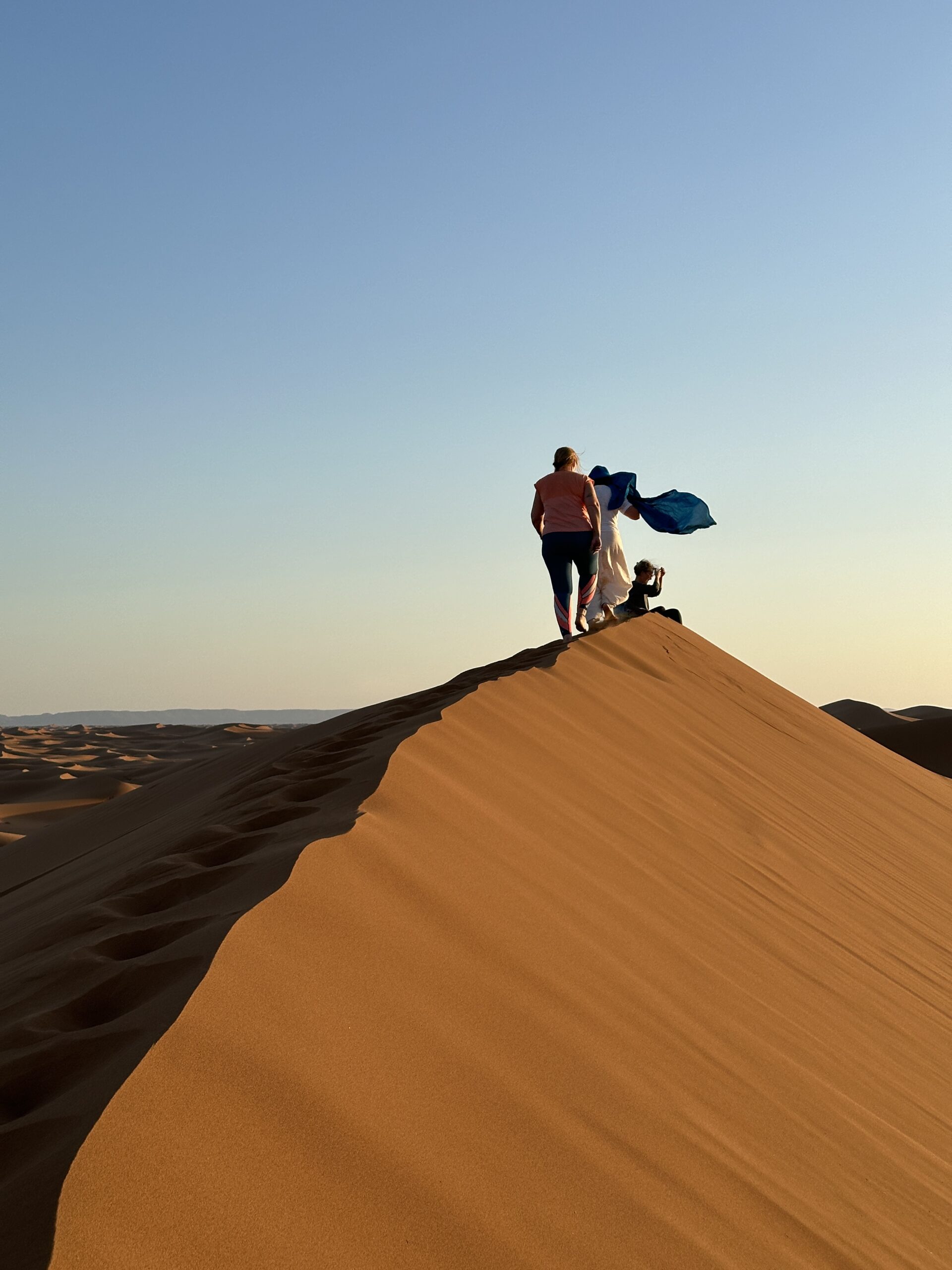
Erg Chegaga is the largest sandy desert of Morocco. It is located 65 km west of M’Hamid, the last village before the desert begins, at the end of the road of the idyllic Draa Valley (Wadi Draa – a dried-up river bed). The largest dune is Erg Laabidlia with a height of about 300 meters, which you can climb on with much endurance. The wonderful fine-grained warm sand extends in its dune formation – dunes over dunes – over 150 square kilometers.
A sea of sand as far as the eye can see. Here you can feel the peace and quiet of the Sahara. A breathtaking sight is when you sit on a dune observing the sunset or the sunrise and feel the endless expanse of the Sahara and look at the sea of dunes.
The region is best reached with a jeep and a local driver, or with camels and local guides.
Erg Chegaga was until 1990 in a military exclusion zone and was therefore rarely visited by tourists. It is located not far from the Algerian border between the two towns of M’Hamid (about 65km away) and Foum Zguid (50km of desert sand piste roads from Chegaga).
Meanwhile Erg Chegaga is very popular and known by tourists but has retained her original character. M’Hamid’s tourism is trying to establishing and maintaining a gentle tourism that is in harmony with nature.
The team members of the Sahara Trend team grew up in M’Hamid and have therefore had close ties to the Sahara since childhood. They live here in harmony with the desert. We are particularly concerned about the protection and preservation of this wonderful unique nature reserve, so that on the one hand tourists can experience the beauty but on the other hand that this beauty can also be preserved.That is why we always strive to make our excursions and desert trekkings consistent with the rhythm of nature.
Once you experience the desert, you will be able to carry its beauty and its power in your heart for a long time.
Near Chegaga is also the Oum Lâalag Sacred Spring “Oasis Sacrée”. Palm trees and acacia trees grow at the source and its little stream, and goat herders are often found near them, stopping in the shade of the trees. It is also part of the 123,000 hectare D’Iriqui National Park which was established in 1994.
On your way you will come through the different desert landscapes with different vegetation. There are interesting valleys with old names such as Wad L’Atache (valley of thirst) or Wad Naama (valley of the ostrich) and your companions are going to explain you the plants and animals that you will encounter there.
Also experience a true mirage, a mirage that fools you into a lake of cool, refreshing water in the distance. This is really a fascinating game of nature you can observe here. This fascinating experience even the very small children learn from their parents when they grow up in the desert.
Sometimes you will meet camel caravans or, if you are lucky, camel herds will cross your path which will find their food here with relish and peace, mostly accompanied by a shepherd.
Especially in the months of February, March and April, there are always strong greens and even beautiful flowers in some desert that sprout between the sandy and loamy soils.
Here also grows the wild rocket, which the camels like to eat and which is also used by the nomads to prepare a soup. Furthermore numerous medicinal herbs grow in the Sahara, which the nomads still use today and keep their secret.